The grandeur of Calpe: From Roman legions to pirate legends
A history to fall in love with
(A great historical route with GPS guide)
From the creators of the route: This tour is a tribute to the city we are hopelessly in love with. INFTOUR SPAIN S.L. is not only dedicated to the sale, rental, construction and renovation of property in Calpe. We help our guests find their true home here. So that you may feel the living soul of this place as deeply as we do, we have created this guide. You will find more information at www.inftour.com, and we will be delighted to receive your comments and suggestions. You can follow this route with live audio accompaniment by downloading our free GPS tour on the izi.TRAVEL platform.
Welcome to a time machine. Calpe is not just a sunny Spanish resort town. It is a chronicle in stone, where every paragraph is steeped in salt spray, gunpowder and the scent of wild rosemary. Adults will find here a deep philosophy of how human perseverance triumphs over the elements, while children will be immersed in an adventure film with real pirates, sunken submarines and secret passages.
Here Phoenicians and Carthaginians dropped anchor, Roman legions marched, Iberians and Visigoths built their settlements, and Arab scholars prayed. Until the 17th century, the horizon concealed a deadly threat: the black sails of African corsairs forced the town to bristle with watchtowers. And towering above it all, cleaving the Mediterranean in two, rises the colossal Peñón de Ifach: a sleeping giant and the main symbol of the Costa Blanca, guardian of the picturesque bays of Arenal-Bol and La Fossa.
Put on comfortable shoes, fire your imagination, and join us on a journey through 13 emblematic places where history beats beneath your feet.


1. La Fossa beach: The drama of man and the ocean
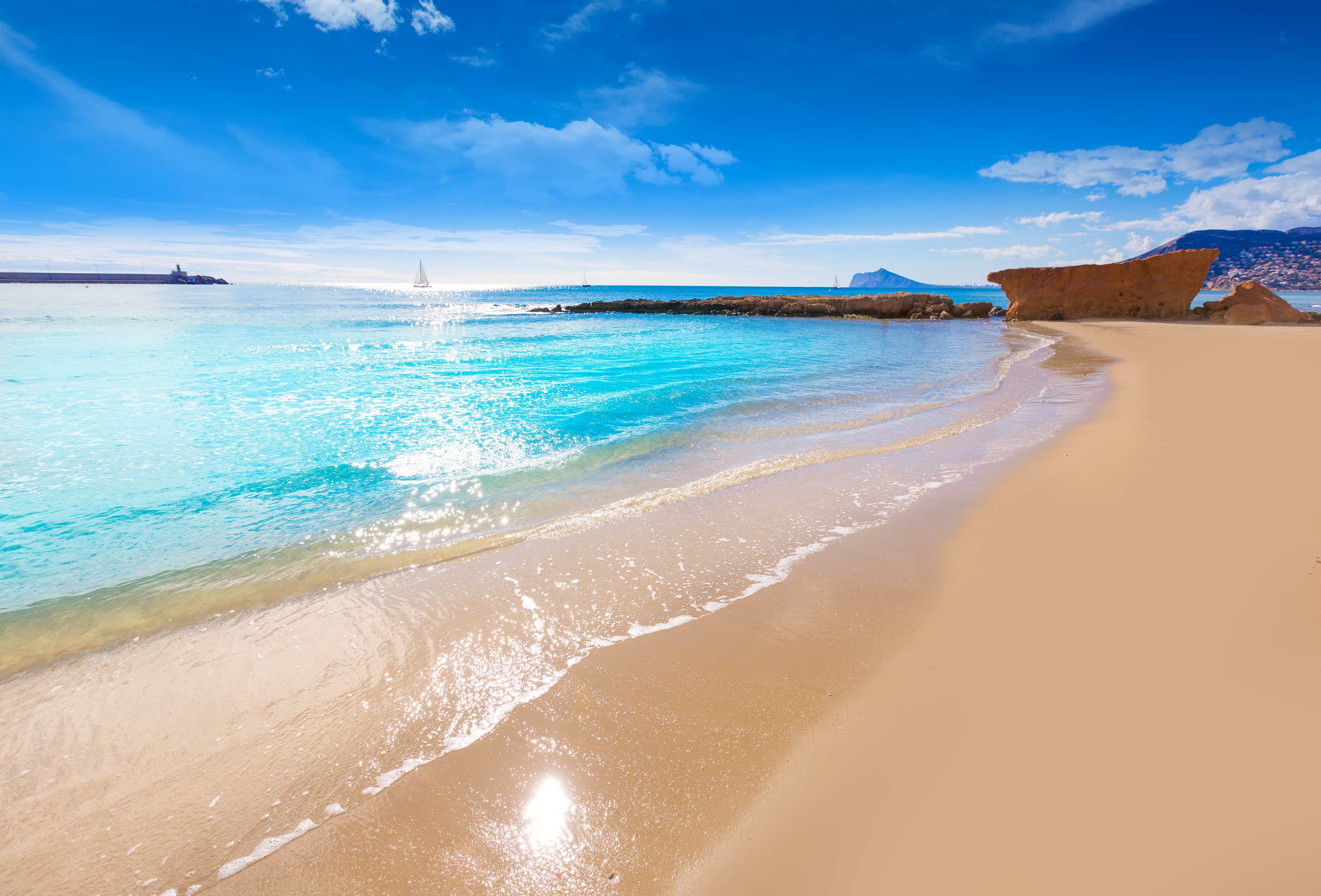
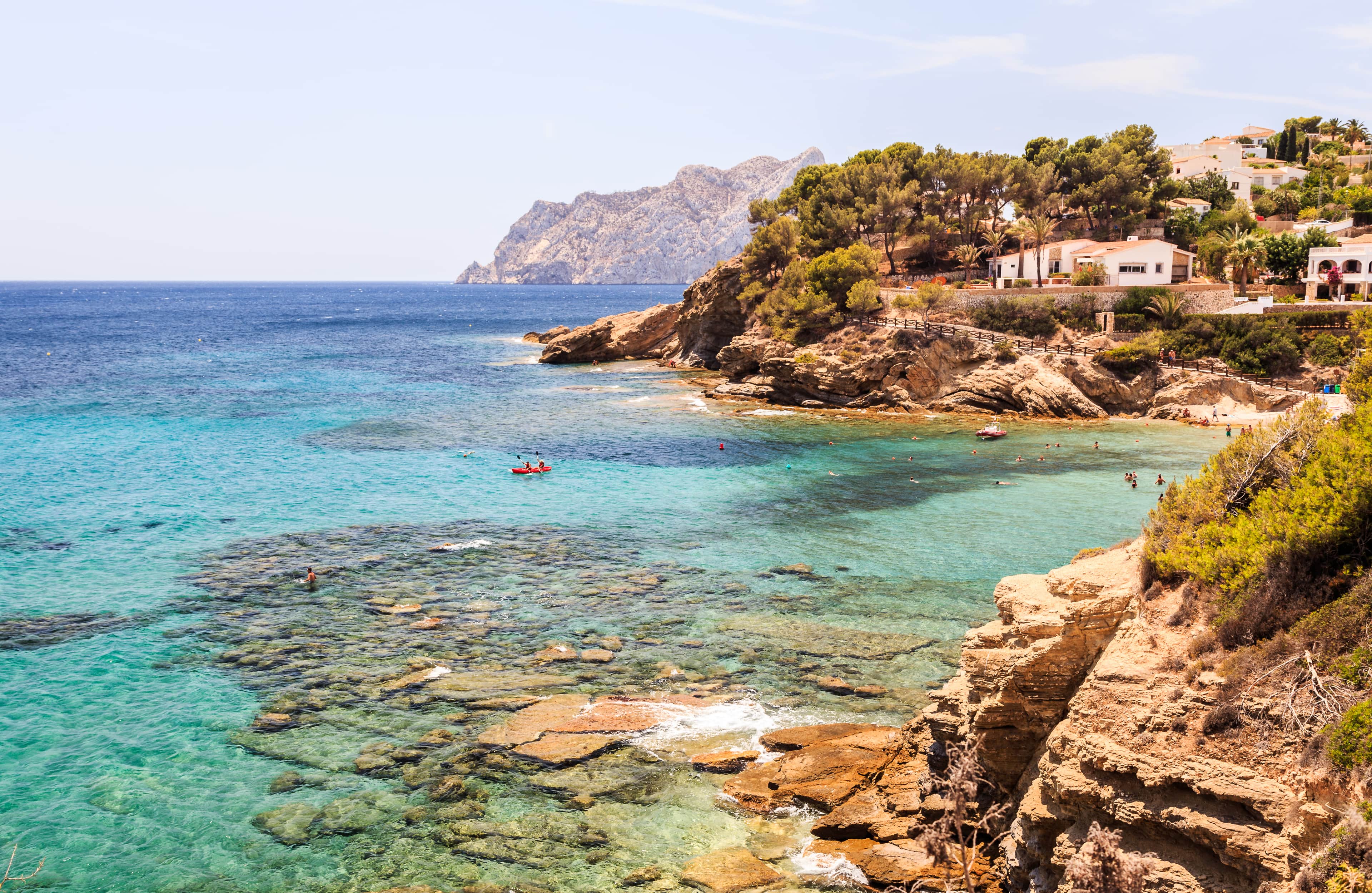
Adults will see before them a peaceful bay, sheltered from north and south winds. Children will see an ideal pirate hideout. Thanks to its variable depth of one to two metres, ships anchored here for centuries without fear of damaging their hulls. In 1807, sailors considered this place a perfect defensive hideout. But the sea always exacts its toll. Try to imagine how, in 1881, the night sky blazed with fire: an English wooden ship burned to the waterline (such fragile vessels could perish in an instant from a single spark). In 1926, a fierce storm smashed three ships, causing their owners a catastrophic loss of 90,000 pesetas (at that time, 1 peseta was worth about 0.3 g of pure gold!). But the most terrible night fell on La Fossa in 1931. The old sailing ship "Leso", loaded with calcium carbide, ran aground. Water penetrated the holds, the chemical reacted, and a monstrous explosion claimed the lives of the entire crew and the local Calpe fishermen who rushed to help. People tried to make the bay safer by installing two wooden posts with lanterns. But tragedies continued. In October 1944, Father Vicente Llopis wrote bitterly: "Of more than ninety boats... only eleven are fishing this year... Calpe has no maritime port... Almost every year we watch with pain the destruction of our boats." The safe harbour was not built until 1957. This place is a philosophical monument to the strength of human perseverance that, through trial and bitter mistakes, found the way to the sea.

2. Peñón de Ifach: A city on the rock
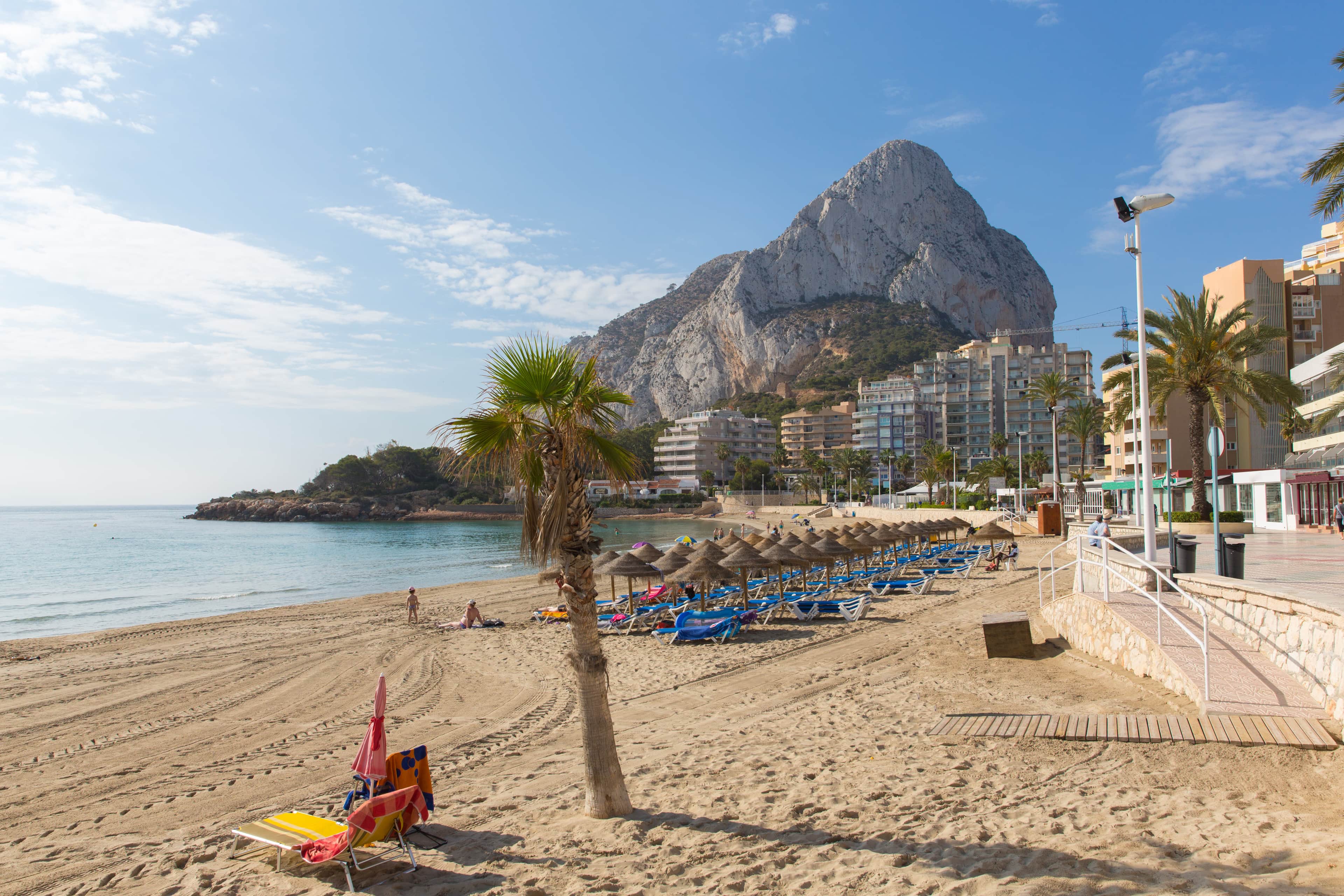
This limestone giant (332 metres high, 1 kilometre long and 50,000 square metres) is a living witness to the ages. On its northern slope traces of the Bronze Age have been found, and on the western slope, an Iberian settlement from the 4th–3rd centuries BC. In Roman times life bustled on the narrow isthmus, and in the Middle Ages King Peter III of Aragon built a true fortress on its slopes. It survived a century until the attack of the Castilian fleet in the War of the Two Peters destroyed it, forcing its inhabitants to descend and found modern Calpe. The rock holds countless secrets. Until 1862 it belonged to the municipality and then passed into private hands. In 1918 its owner, Don Vicente París Morla, achieved the impossible: hand-drilling a pedestrian tunnel through the north face towards the summit. In 1951 the new owners, led by José Mas Capó, built without permission on the plateau the enormous four-storey "Ifach Palace" hotel (today known as "Miradores de Levante"). Not until October 1987, when the Generalitat Valenciana acquired the Peñón, did the army demolish this unfinished structure, restoring the mountain to its original appearance. Today it is a unique natural park. The botanist Cavanilles began studying it long ago, and since 1971 scientists have documented some 300 plant species (including extremely rare Iberian endemics) and 80 bird species. With a little luck, children may spot in the sky the swift Eleonora's falcon or the shag!
3. Cala El Racó: An underwater quest
This small rocky beach southeast of the port is a real treasure for young (and adult) explorers. Here, students from the Catholic University "San Vicente Mártir" of Valencia and oceanographers have created a 120-metre educational underwater trail! Put on your snorkelling mask: you do not need to watch Jacques-Yves Cousteau films or envy explorers on screens. Under the water there are installed information panels that will help you decipher all the secrets of the picturesque seabed.
4. La Lonja: Traditions in arrobas
Nearby, the lively harbour throbs with life. Long ago, when there was no marina, fish auctions were held directly on the Levante or La Fossa beaches, and later on the piers at the foot of the rock. Fish was placed in baskets, covered with ice and palm leaves, and weighed on the old arroba scales (1 arroba = 13 kg). The first fish market was built in 1979, and the current building in 1991. Come here Monday to Friday around 5 p.m.: from the viewpoint you will see the genuine passion of the two-hour auction, and then you can taste the freshest catch in the famous nearby seafood restaurants.
5. Las Salinas de Calpe: Pink birds and the salt tax
A stone's throw from La Fossa beach shines a lagoon. For children it is a fairy-tale lake where, in spring and autumn, pink flamingos, herons and black-winged stilts gather. For adults it is a philosophical lesson in economics. The supply of salt was the main problem of every culture. The Roman Empire even paid its legionaries with a handful of salt! On 13 June 1260 King James ceded the lagoon to Bernat de Clora on condition that four fifths of production be delivered to the crown. In 1364 the Count of Dénia leased it to Guillem Auig. Soon monarchs imposed an incredibly burdensome levy: the gabelle. From 1510 every household, every hundred head of livestock and even every child was obliged to buy a stipulated amount of salt. Until the late 19th century, when roads were built, salt was transported with great danger by sea or on the backs of animals. Today this salt empire is a protected reserve.
6. Los Baños de la Reina: Ancient factory or secret escape?
Right in the sea, stone tanks were carved. Water entered through four channels (two to the south, two to the west), skilfully dissipating the energy of the waves. Historians believe it was a Roman salting works for mackerel and tuna (since there is fresh water and salt pans nearby). But locals have a breathtaking legend: it is said that from the cliff a subterranean tunnel several kilometres long was built to the La Cometa housing development. In case of pirate attack, a wealthy family could escape underground straight to the boats! The legend says the entrances to this tunnel are sealed today.
7. Torre del Molí
Before you, stone foundations seven metres high. They are not only the base of Calpe's old flour mill. They are the remains of a formidable watchtower built in 1583 by order of King Philip II to guard against corsairs. Inside hides an ancient spiral staircase with built-in embrasures. Only with time was a conical wooden cap added to the tower, turning sword into ploughshare: the fortress became a peaceful mill.
8. Arenal-Bol beach: The gold of the Third Reich
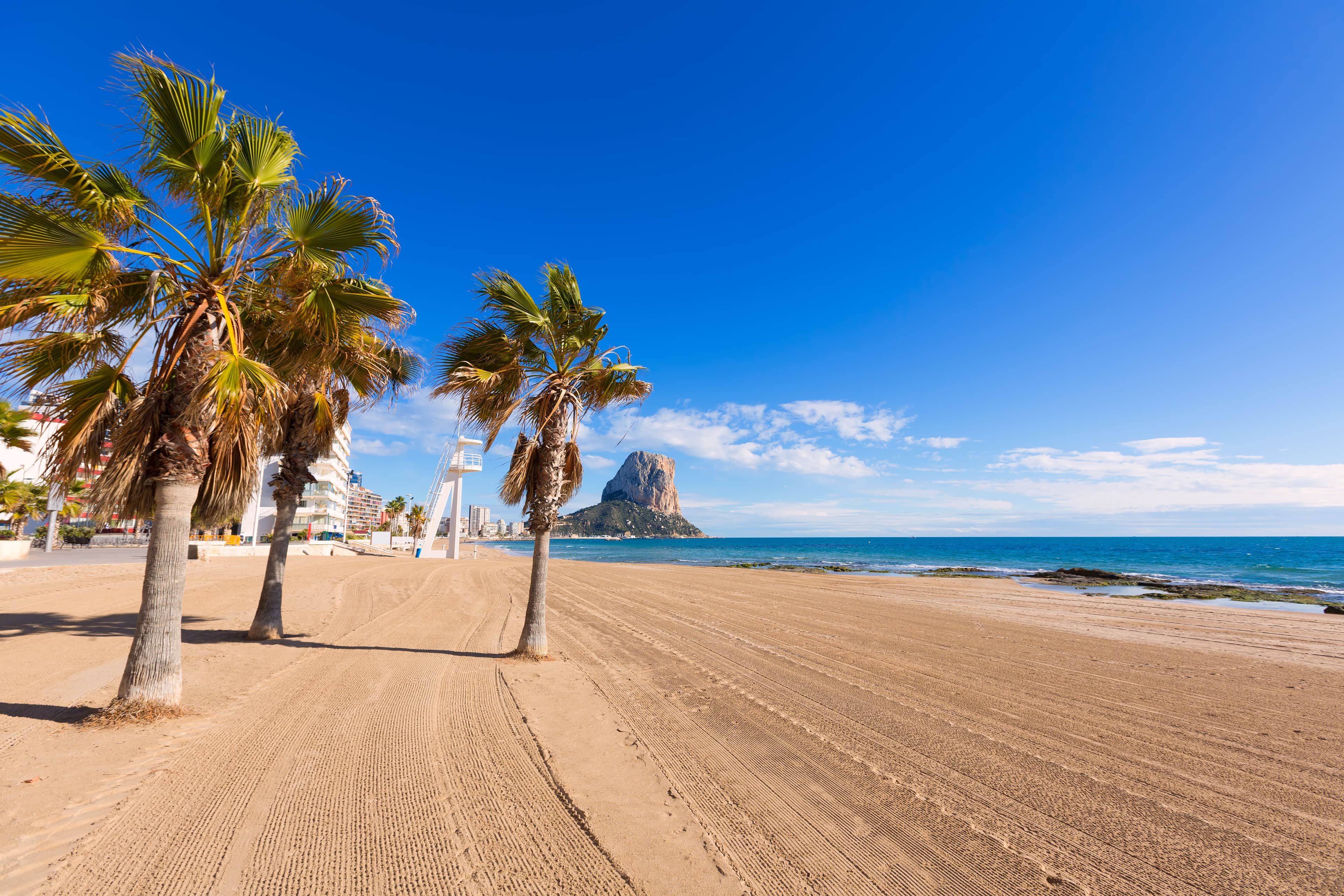
Calpe's longest beach: almost 1,200 metres of golden sand up to 40 metres wide! Here you will find everything for carefree relaxation: playgrounds, toilets, bars and even a beach library. Its gentle slope makes it ideal for the smallest children (you must wade 10–15 metres before the water reaches chest height). But look far out to the blue sea. During the Second World War, two English Lockheed A-28 Hanson aircraft that took off from Gibraltar destroyed the German submarine U-77 just off this coast. Legend claims it carried gold bars belonging to General Rommel or Hitler himself, lost forever on the seabed.

9. The Old Church: Prayers sheltered by loopholes
Built in the early 15th century, it is the only Mudéjar Gothic monument in the Valencian Community. Look at its thick walls: it is not only a church, it is a fortified bastion. Behind these very walls the people of Calpe took refuge, hearts in their mouths, during cruel pirate raids.
10. Church of Our Lady of the Snows
A singular temple that was not originally a church at all. When James the Conqueror liberated the city, he turned a small Arab building (probably a barracks or administrative structure) into a church. Since then it has grown with the city. In 1750 the sacristy and choir were added, and the pebble floor was replaced with red brick. In the mid-19th century it was enlarged thanks to donations from all the neighbours. In 1904 parish priest Don Ginés Almagro removed four rough stone spheres from the bell tower, and in 1913 Don Juan Rostoll paved the church with mosaic, carefully preserving the priests' tombstones (including that of Don Pedro Mengual of Teulada). Sadly, in 1936 revolutionaries burned the church and these invaluable slabs disappeared forever.
11. Torreó de la Peça: The night the guard fell asleep
Part of the 15th-century defensive complex with pentagonal bastions. In the 13th and 14th centuries the city lived in constant fear. The most tragic night in Calpe's history came in 1637: the sentries fell asleep and Barbary pirates slipped in, capturing almost all the people of Calpe. After another devastating raid on 22 October 1744, construction of the city's second wall began. The Torreó de la Peça itself was discovered by chance in 1947 when part of the wall collapsed, revealing this forgotten military story to the world.
12. Cala del Penyal
A secret, isolated beach on the north face of the Peñón de Ifach. It is reached only by a small path and there is no seafront promenade. Coming down here is like travelling through time. Imagine that beyond the rock there are no cities or cars. Only you, immensely transparent water, a rich seabed for diving, and eternity.
13. Ermita del Salvador: A light in the darkness
On the hilltop stands a hermitage born of respect for wisdom. The chronicles relate that around 1116 an elderly Moor named Sudi Yaya Beni Cola lived here. He had made the pilgrimage to Muhammad's tomb in Mecca and was revered by all for his wisdom. One day, when he did not come out to pray, his neighbours forced the door and found him dead. They buried him in a hollow on the slope, and his house became a marabout (Muslim shrine). When James I the Conqueror took the city, the marabout became the Christian hermitage of San Salvador. Later, because of frequent raids (recorded in the archives of 1607), it was decided to build a new hermitage beside it, and in 1620 a new altar was made. On maps of 1745 it already appears in its present location. The old Calvary was destroyed in the Civil War (rebuilt in 1945 and renovated in 1993). But the hermitage's most romantic era was in the mid-20th century. Local sailors lit an oil lamp on its façade every night, taking oil from the olive tree that grows beside it (and is still there today). That tiny flame served as a lighthouse, guiding boats through the darkness. Today the Gothic pointed-arch hermitage opens its doors on 6 August, and its keys are jealously guarded by the neighbours of La Ermita street.
INFTOUR tip: Calpe's historic centre is a true labyrinth of narrow cobbled streets where, behind the thousand-year-old stone walls of towers and temples, internet connection is often lost. To avoid a sudden loss of signal interrupting the fascinating tale of Barbary corsairs and Roman legions, make sure you download our route in the izi.TRAVEL app for offline access before leaving your villa. And to crown this historical walk beautifully and without haste, ask our intelligent AI assistant to find for you the most authentic taverns in the Old Town with the best reviews and to give you direct contacts to book a table. Immerse yourself in the magic of the past while leaving logistics and navigation to modern technology.