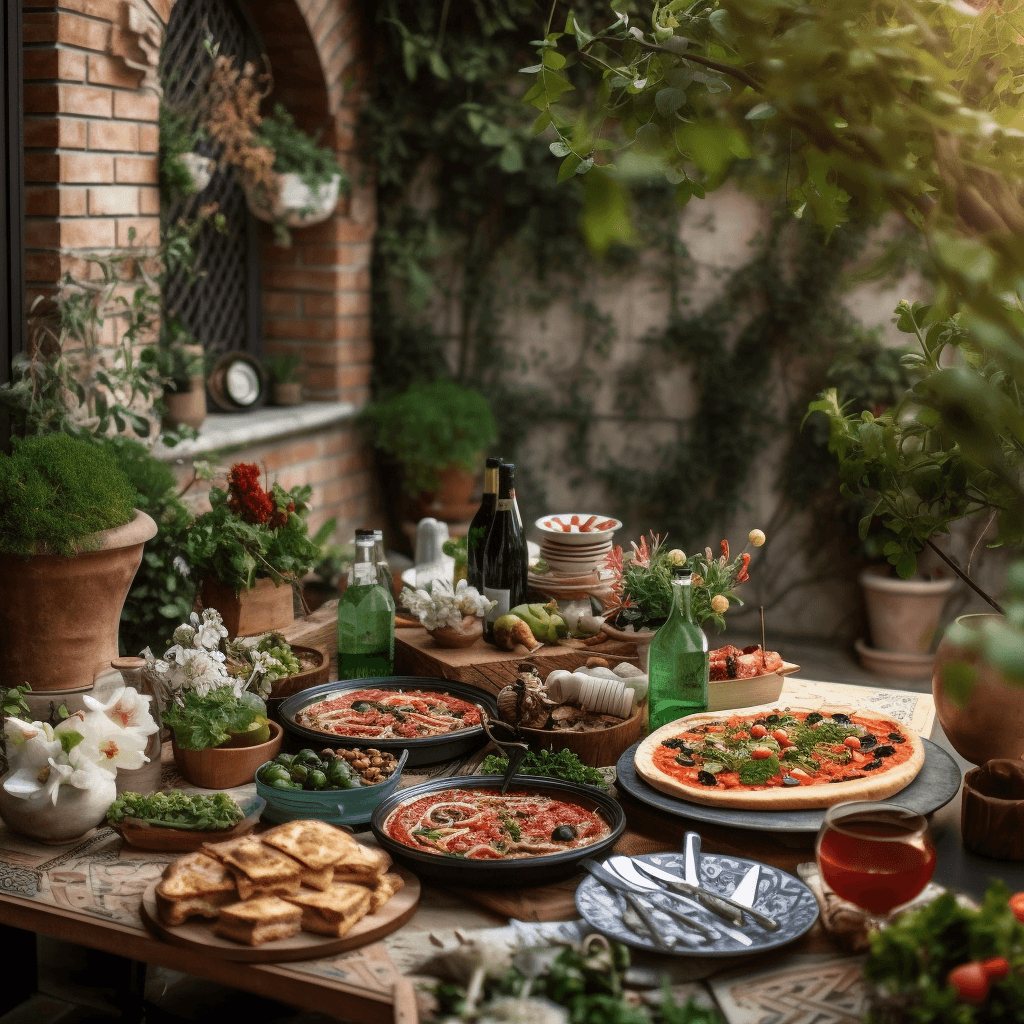
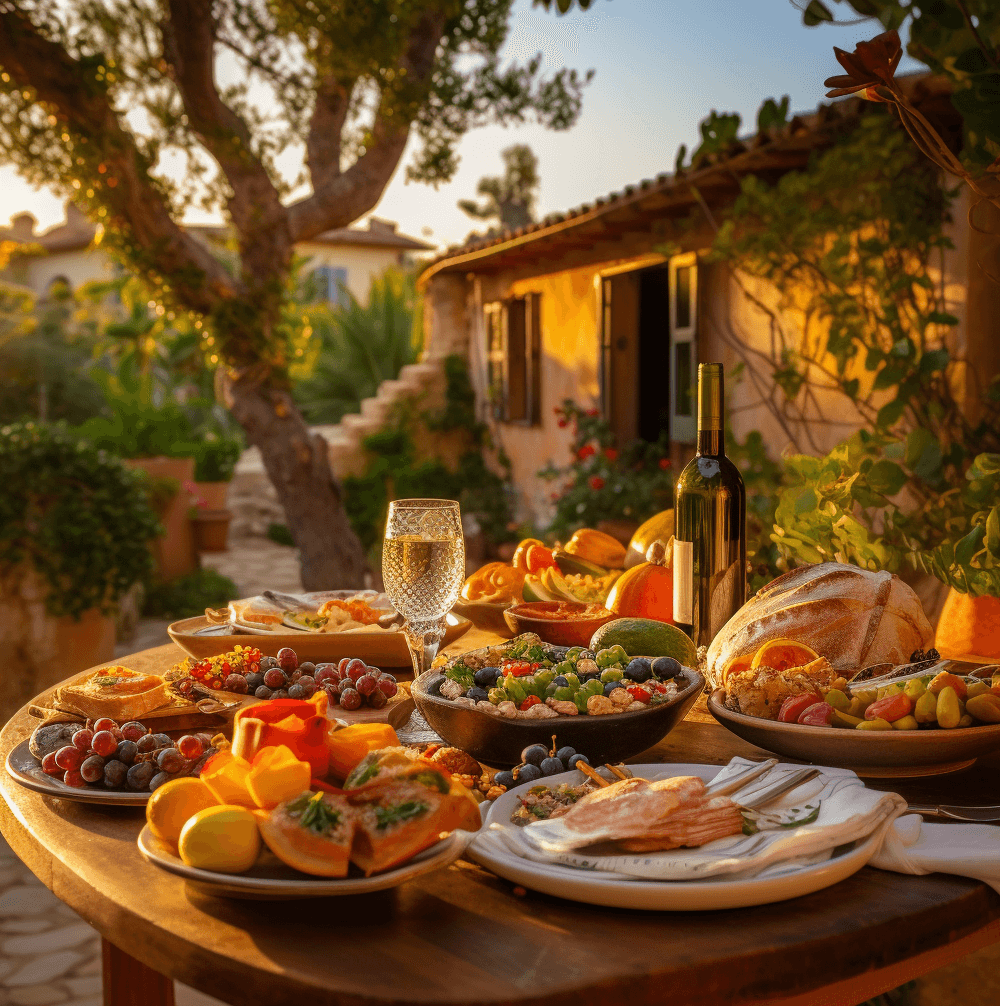
Flavor with History: 10 Recipes for a Perfect Mediterranean Evening.
Mediterranean cuisine is not a strict science; it is pure intuition and the enjoyment of the process. If this is your first time cooking on the Costa Blanca, forget about rushing. The kitchens in Inftour apartments are designed to turn food preparation into a true hedonistic ritual. Pour yourself a glass of wine, put on soft music, and let these 10 historical recipes fill your evening with magic.
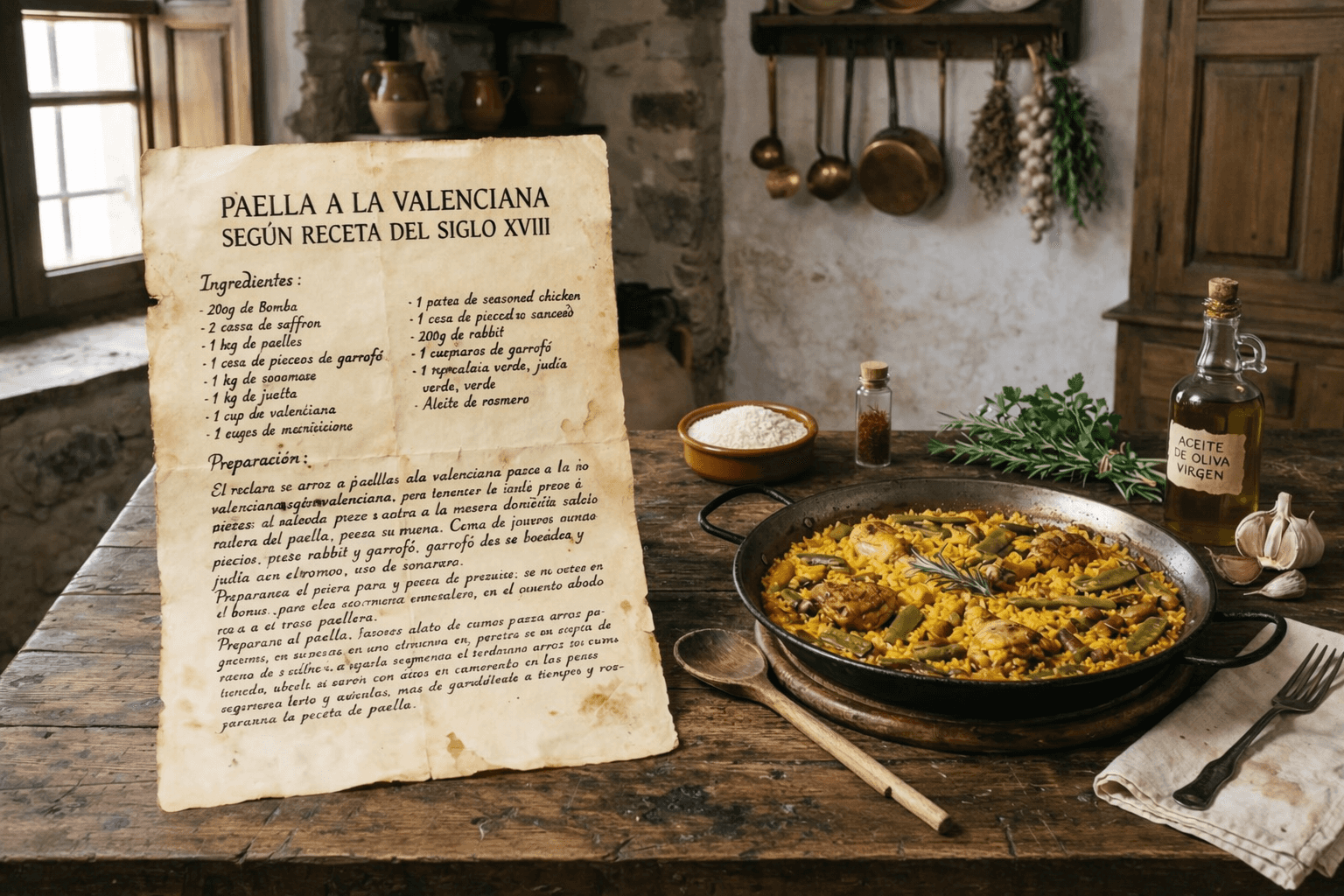
1. Paella Valenciana (The authentic Valencian paella)
Forget the tourist paella with prawns and sausages. The true Valencian classic is a symphony of meat, tender vegetables, and rice infused with a golden broth. The main goal is the socarrat (the caramelized crust on the bottom).
Source: Official regulations of the DO Arroz de Valencia.
Ingredients
The ritual (for 4 people): You will need: 400 g of Bomba round rice, 500 g of chopped chicken, 300 g of rabbit, 200 g of flat green beans (bajoqueta), 100 g of garrofón beans, 1 grated tomato, a pinch of saffron, a sprig of fresh rosemary
Preparation
1
The sofrito. In a wide paella pan, heat a generous layer of olive oil. Fry the pieces of meat over medium heat until they take on a deep golden and crispy color. This is the foundation of the flavor
2
The vegetables. Move the meat to the edges and place the green beans and grated tomato in the center. Breathe in that sweet aroma of the sofrito; keep it on the heat for 3 to 4 minutes
3
The magic of the broth. Pour in the water (it should come just up to the rivets of the paella pan handles). Add the sprig of rosemary and the saffron threads. Let this brew simmer for 20 minutes, filling the house with an intoxicating aroma. Add salt: the broth should be a little saltier than you are used to
4
The rice and the silence. Remove the rosemary. Add the rice in the shape of a cross (caballón) and then carefully distribute it into an even layer with the skimmer. From this moment on, it is strictly forbidden to stir the dish!
5
The birth of the socarrat. Cook for 18 minutes (first over high heat, then lower it). Listen carefully: when the water has almost evaporated, the rice will begin to crackle in a very distinctive and appetizing way; it is the crust that is toasting. Turn off the heat, cover the paella with a clean cloth, and let it “rest” for 5 minutes.
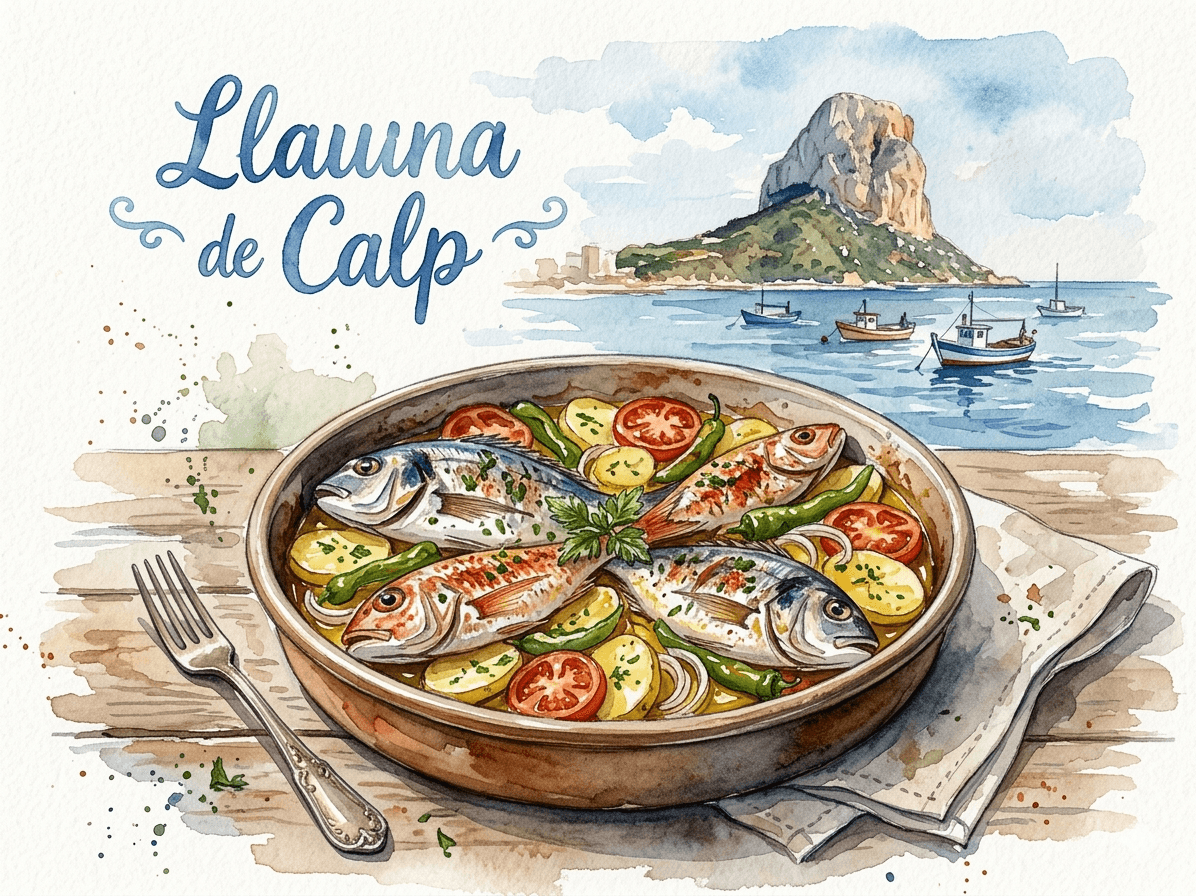
2. Llauna de Calp
The soul of our port. Imagine the most tender fillet of fresh fish, infused with the sweet juice of roasted tomatoes and a vibrant garlic oil.
Source: The work La cocina alicantina in the BIVALDI archive.
Ingredients
The ritual: You will need: 600 g of firm-fleshed white fish (hake, monkfish, or sea bream in thick pieces), 3 potatoes, 2 ripe tomatoes, 3 garlic cloves, 1 teaspoon of sweet paprika, the best extra virgin olive oil
Preparation
1
The bed. Slice the potatoes and tomatoes into thin, elegant rounds. Arrange them overlapping in a baking dish: first the potato, then the tomatoes on top. Lightly salt
2
The fish. On top of this bed of vegetables, place the juicy, thick pieces of fish
3
The aromatic oil. Finely chop the garlic, mix it with the paprika, and sprinkle it generously over the fish. Now drizzle everything with a thick thread of olive oil so the ingredients shine in an appetizing way
4
Baking. Place the dish in a preheated oven at 200°C for 25 minutes. The potato will become soft and buttery, and the fish will begin to fall apart into pearly flakes at the slightest touch of a fork.
3. Arròs del Senyoret (The gentleman’s rice)
The perfect choice if you wish to enjoy seafood without getting your fingers dirty. Here all the prawns and squid are already peeled: a pure and silky taste of the sea.
Source: Archives of the Biblioteca Virtual Miguel de Cervantes.
Ingredients
The ritual: You will need: 300 g of Bomba rice, 300 g of peeled raw prawns, 200 g of squid rings, 1 liter of a powerful fish broth (you can buy a good ready-made broth at the supermarket), 1 tablespoon of tomato paste or homemade salmorreta
Preparation
1
Quick sofrito. Heat oil in the paella pan. Add the prawns for just 30 seconds, only so they take on some color, and remove them immediately to a plate (otherwise they will turn rubbery). Do the same with the squid
2
The flavor. In that same aromatic oil, smelling of the sea, add the tomato paste. Fry it a little and add the rice. Stir with a wooden spoon so that each grain is coated and takes on a pearly shine
3
Slow cooking. Pour in the hot, steaming fish broth. Add saffron. Cook gently for 15 to 18 minutes without stirring
4
The grand finale. Two minutes before the end, when the broth has almost been absorbed, aesthetically arrange the reserved prawns and squid over the rice. Serve immediately, accompanying the table with a bowl of thick homemade alioli.
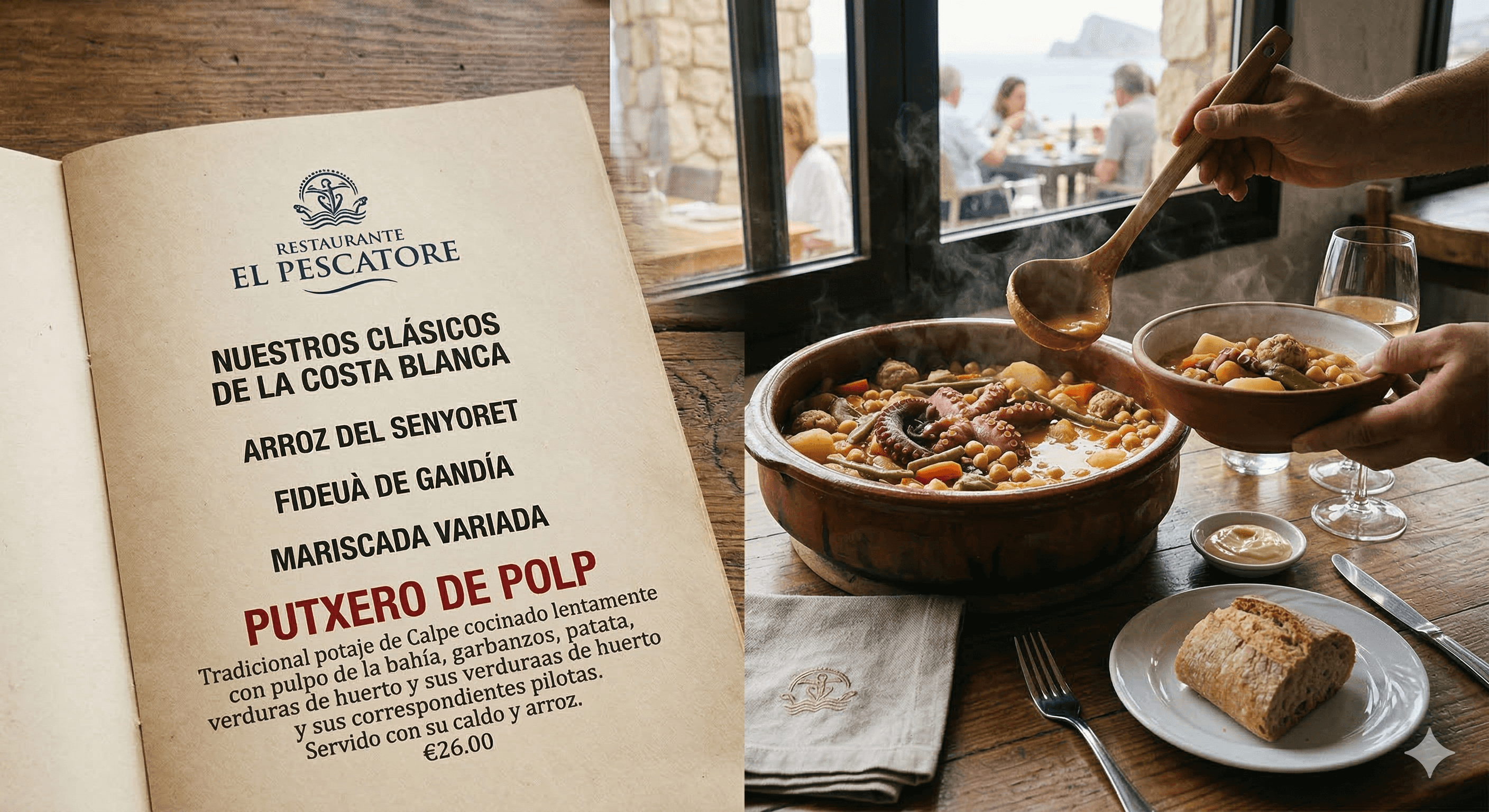
4. Putxero de Polp (Octopus stew)
The magic of slow cooking. The flesh of the octopus becomes so tender that it can be cut with a spoon, and the rich broth surrounds it with the sweetness of sweet potato.
Source: Archives of the Peix de Calp Fishermen’s Guild.
Ingredients
The ritual: You will need: 1 medium octopus (buy it already frozen so it comes out more tender), 200 g of canned chickpeas (for speed), 2 sweet potatoes, 1 onion, a handful of toasted almonds
Preparation
1
The octopus. Without fully thawing it, immerse the octopus in boiling water. Add the whole onion and cook over low heat for 40–50 minutes, filling the house with a cozy aroma. Pierce a tentacle with a fork: it should be tender
2
The consistency. Add the sweet potatoes in large, sweet pieces and the rinsed chickpeas to the broth. Boil for another 15 minutes
3
The chef’s secret. Crush the almonds in a mortar (or blender) with a couple of spoonfuls of broth. Pour this paste into the pot 5 minutes before the end. The broth will instantly become creamy, velvety, and take on a subtle nutty profile.
5. Fideuà de Gandia
Here, the thin noodle is the protagonist. As it soaks up the hot broth, the pasta absorbs all the essence of the seafood and, at the end, curls upward in a playful way, creating a crispy crust.
Source: The canonical recipe of the Asociación Fideuà de Gandia.
Ingredients
The ritual: You will need: 300 g of special fideuà noodles (No. 3 or No. 4), 4–6 whole langoustines or large king prawns, 200 g of white fish fillet, 1 liter of fish broth, saffron threads
Preparation
1
Flavoring the oil. In a paella pan or wide frying pan, fry the langoustines until they take on a bright orange color (they will leave all their flavor in the oil). Set them aside
2
Toasting the noodles. In that same oil, add the pieces of fish and then the dry noodles. Stirring constantly, toast them for a couple of minutes until they take on a hazelnut-golden color. This will prevent them from overcooking
3
The boil. Pour in the boiling saffron broth (it must sizzle!). Place the langoustines on top. Leave over high heat for 10 to 12 minutes. When the noodles have absorbed all the liquid and begin to rise shamelessly, the dish is ready. A few drops of lemon juice directly on the plate will lift the flavor to the absolute.
6. Cruet de Peix (Historic fish stew)
The secret lies in the raw technique: here nothing is fried first. The potato absorbs the juices of the fish, turning the broth into a golden nectar in which you will want to dip fresh bread to the very last drop.
Source: Original manuscript of the Llibre de Sent Soví (year 1324).
Ingredients
The ritual: You will need: 800 g of any rock fish with bone (ask at the market to have it cut for soup), 4 potatoes, 1 onion, 3 garlic cloves, a pinch of saffron, half a glass of olive oil
Preparation
1
The assembly. Take a nice pot. Place at the bottom a compact “bed” of thick slices of potato and onion. On top, distribute the pieces of fish and add the unpeeled garlic cloves
2
The emulsion. Pour in cold water just until it covers the fish (no more!). Add salt, saffron, and pour in the olive oil
3
Over low heat. Bring to a boil and then lower the heat. Cook over low heat for 20–25 minutes. Never stir with a spoon! Simply rock the pot from time to time by the handles so that the oil and water mix into a thick and incredibly tasty sauce.
7. Espencat (Mediterranean escalivada with cod)
The smoky and sweet aroma of roasted vegetables contrasts phenomenally with the salty touch of the cod. And the olive oil binds it all together into a starter from which it is impossible to tear yourself away.
Source: Research from the Chair of Gastronomy of the University of Alicante.
Ingredients
The ritual: You will need: 2 fleshy red peppers, 1 large eggplant, 150 g of salted cod flakes (available in supermarkets), 2 garlic cloves, plenty of extra virgin olive oil
Preparation
1
Roasting. Put the whole peppers and eggplant in the oven (200°C) for 40–50 minutes, until their skin blackens and wrinkles. Do not be alarmed, it has to be like that! Let them cool
2
Handwork. Remove the “charred” skin (it will come off easily). Do not use a knife! Tear the juicy flesh of the vegetables with your hands into long strips directly into a salad bowl
3
The cod. If the cod is too salty, rinse it with water. Shred it into strands and add it to the vegetables
4
The culmination. Add the very finely chopped garlic and generously drizzle everything, without skimping, with a good splash of olive oil. Let it rest in the fridge for at least one hour.
8. Arroz a Banda
The apotheosis of sailors’ minimalism. The rice is cooked in a powerful broth, absorbing all the strength of the sea. Each grain becomes a brilliant bomb of umami.
Source: Works of the historian Antonio Beltrán.
Ingredients
The ritual: You will need: 300 g of Bomba rice, 150 g of fresh cuttlefish cut into cubes, 1 liter of the most concentrated fish broth you can find, 2 garlic cloves, 1 teaspoon of sweet paprika
Preparation
1
The cuttlefish. In a paella pan or wide frying pan, heat oil. Fry the tender cubes of cuttlefish for a couple of minutes until they brown. Add the finely chopped garlic
2
The paprika and the rice. Remove the pan from the heat, add the paprika, and stir quickly (if the paprika burns, the dish will turn bitter). Immediately add the rice and put it back on the heat. Sauté the rice for 1 minute
3
The cooking. Pour in all the boiling fish broth. Cook for 18 minutes, watching how the rice eagerly absorbs the sea. Serve very hot, crowning the dish with a spoonful of alioli.
9. All i Pebre (Garlic and pepper)
A bold and temperamental dish. Its thick, deep red sauce wraps the tender pieces of white fish and potato. This sauce is so good that you will eat an entire loaf of bread dipping the crumb into the plate.
Source: Original treatise Llibre de Coch (year 1520).
Ingredients
The ritual: You will need: 500 g of white fish fillet (fresh cod, sea bream), 3 potatoes, a whole head of garlic, 1 tablespoon of sweet paprika, a little hot chili to taste, olive oil
Preparation
1
The base. In a deep frying pan or casserole, heat the oil well. Add 5 or 6 peeled garlic cloves and the chili. Fry them until they release a spectacular aroma and take on a golden tone
2
The sauce. Remove it from the heat! Add the paprika, stir, and immediately pour in 2 glasses of water to prevent the spice from burning. Put it back on the heat
3
The potato. Cut the potato making a “clack” (make a small cut with the knife and break the rest of the piece; this way it will release the starch that will thicken the sauce). Add it to the boiling broth
4
The fish. After 15 minutes, when the broth has thickened and the potato is tender, immerse the large pieces of fish in the sauce. Cook for 5 to 7 more minutes.
10. Coca amb Tonyina (Alicante coca with tuna)
A very ancient savory pie that will make you lose your head. Its thin and crispy dough hides sweet caramelized onion, tuna that melts in the mouth, and toasted pine nuts.
Source: Digital collections of the National Library of Spain.
Ingredients
The ritual: You will need: For the dough: 250 g of flour, 100 ml of olive oil, 100 ml of white wine, a pinch of salt. For the filling: 2 cans of good canned tuna (drain the oil), 2 large onions, a handful of pine nuts, 1 teaspoon of sweet paprika
Preparation
1
The filling. In a frying pan, over low heat, poach the finely chopped onion for about 20 minutes, until it reaches an amber sweetness. Remove from the heat, add the tuna (flaked with a fork), the crunchy pine nuts, and the paprika. Mix well
2
The dough. In a bowl, mix the wine, the oil, and the salt. Gradually add the flour, kneading until you obtain a smooth and incredibly pliable dough. Divide it into two parts
3
The assembly. Roll out the first half of the dough into a thin rectangle on baking paper. Distribute the aromatic filling. Cover with the second layer of dough and seal the edges elegantly. Prick the top with a fork
4
Baking. Put it in the oven (190°C) for 30–35 minutes. Take it out when the house fills with a festive aroma and the crust is golden and crispy. This coca can be enjoyed both hot and cold.
Inftour tip: The magic of local gastronomy lies in the details: Bomba rice absorbs water differently from common rice, and a good broth requires specific rock fish (morralla). Save yourself the culinary calculations and the translation of labels: our intelligent AI assistant will instantly recalculate any of these recipes according to the number of diners, prepare a practical shopping list in Spanish, and tell you in which shop in Calpe you can find authentic salmorreta paste or real saffron threads.